Alex Richter · 2 October 2026
Exploring Data Continuity Challenges in Subscription Platforms After Technical Consolidations
Subscription platforms frequently undergo technical consolidations when companies merge systems or upgrade infrastructure to handle growing user bases and new features, yet these transitions often expose gaps in how subscriber information moves between environments without interruption. Data continuity refers to the seamless preservation of records such as billing histories, access permissions, and usage patterns across updated architectures, and observers note that disruptions arise when legacy databases fail to align with modern APIs or when encryption standards shift during the process.
Common Points of Failure in Data Transfers
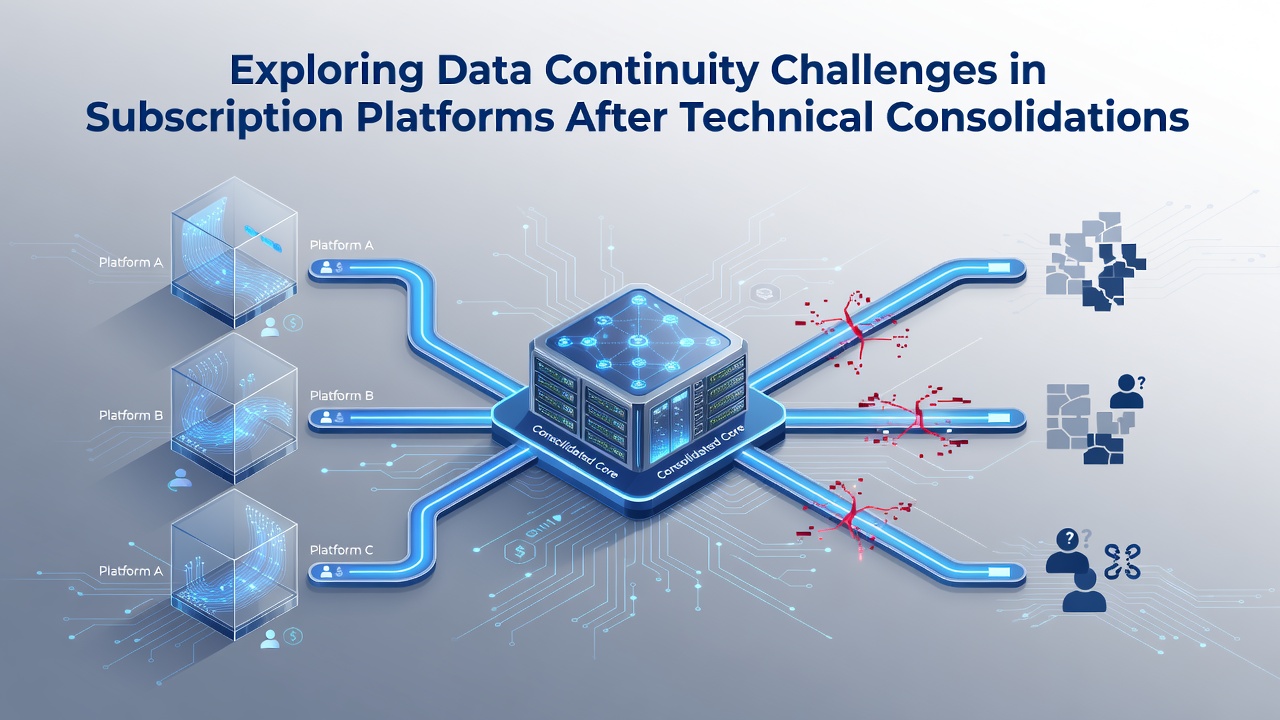
Technical consolidations typically involve combining multiple customer relationship management tools and payment processors into unified platforms, which creates opportunities for mismatched data fields or incomplete synchronization of recurring billing cycles. Studies from research institutions indicate that synchronization errors occur most often around user authentication tokens and subscription renewal dates because these elements depend on precise timestamp matching across previously separate systems. In October 2026, industry reports highlighted increased incidents where consolidated platforms experienced partial data loss affecting active subscriber accounts, particularly when organizations transitioned from on-premises servers to cloud-based environments without full validation testing beforehand.
One case involved a media streaming service that consolidated its user management systems after acquiring smaller competitors, resulting in temporary mismatches between account statuses and content access rights for thousands of users. Experts have observed that such issues stem from inconsistent data formatting standards rather than outright system failures, adn the ball is in the court of platform operators to implement rigorous mapping protocols before final cutover. What's interesting here is how even minor discrepancies in metadata tags can cascade into broader service interruptions that affect revenue collection and user retention simultaneously.
Regulatory and Compliance Pressures
Government agencies across regions have issued guidelines requiring platforms to maintain verifiable audit trails during any major technical consolidation, with particular emphasis on protecting personal data under frameworks like those outlined by the National Institute of Standards and Technology. These requirements become especially relevant when subscription services operate across borders because differing regional rules on data residency can complicate the consolidation timeline. Data shows that platforms handling international subscribers must navigate additional layers of validation to ensure continuity complies with varying consent mechanisms and retention periods.

Researchers discovered through examination of multiple consolidation projects that compliance documentation often lags behind the actual technical work, leaving organizations exposed during audits that follow system migrations. Figures reveal that delays in updating privacy policies to reflect new data handling procedures frequently coincide with continuity gaps, as teams focus on functionality restoration over regulatory alignment. And yet those who've managed these transitions know that early integration of compliance checks into the migration workflow reduces the risk of post-consolidation disputes over subscriber records.
Strategies Observed in Successful Transitions
Platforms that maintain data continuity during consolidations tend to employ phased migration approaches where subsets of subscriber data move in controlled batches while real-time monitoring tracks discrepancies. Industry organizations have documented cases where parallel running of old and new systems for several weeks allowed teams to verify billing accuracy and access continuity before full decommissioning of legacy components. According to academic studies on digital infrastructure, the use of checksum validation and automated reconciliation scripts plays a central role in identifying anomalies that manual reviews might miss.
Take one logistics software provider that consolidated its subscription backend in early 2026; the company employed distributed ledger techniques to create immutable logs of every data transfer, which later proved useful when reconciling edge cases involving canceled subscriptions. The reality is that these methods require upfront investment in testing environments that mirror production conditions, yet they deliver measurable reductions in post-migration support tickets related to data integrity. Observers note that organizations investing in such preparations often complete consolidations with fewer interruptions to revenue streams and user experience metrics.
Impact on User Experience and Platform Operations
Subscribers rarely notice the behind-the-scenes work of technical consolidations until something breaks, at which point continuity failures manifest as unexpected login issues or incorrect billing amounts. Research indicates that platforms experiencing these problems during October 2026 saw measurable spikes in customer service contacts, with many queries centering on restored access to previously purchased content or features. Those managing operations understand that even brief discontinuities can erode trust, prompting users to explore alternative services while the platform resolves underlying data synchronization problems.
What's significant is the downstream effect on analytics and reporting functions, where consolidated data sets sometimes require extensive cleaning before business intelligence tools can generate accurate subscriber lifetime value calculations. Teams that overlook this step during planning find themselves rebuilding reports from scratch once the new system stabilizes, which extends the overall recovery period beyond initial estimates.
Conclusion
Technical consolidations in subscription platforms continue to present data continuity challenges that demand careful planning around migration sequencing, validation protocols, and regulatory alignment. Evidence from multiple sectors demonstrates that platforms addressing these factors systematically experience fewer disruptions and maintain stronger operational stability afterward. As more organizations pursue infrastructure unification in coming years, the patterns established through past consolidations offer clear indicators for what approaches support reliable subscriber data preservation across changing technical landscapes.